Introduction
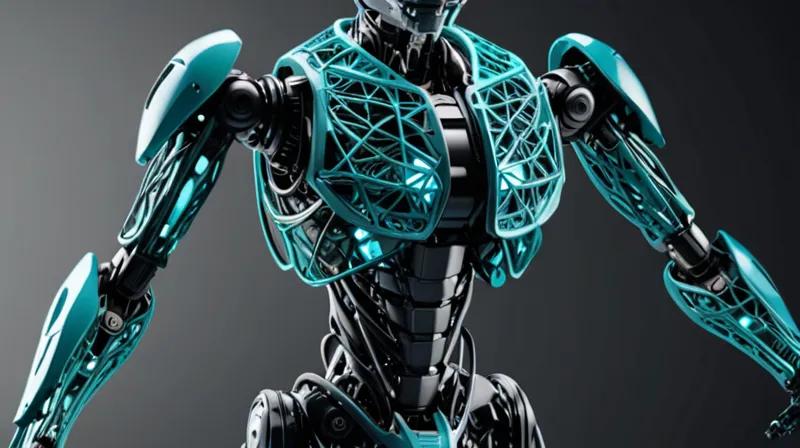
Walden Robotics, a new humanoid robotics company backed by $300 million in funding and valued at $1.1 billion, has emerged from stealth with a unique design philosophy: their factory robots have no legs. This decision, made by the company's founder Russ Tedrake, reflects a deeper understanding of robotics and AI integration in industrial settings. This article explores the technical and strategic reasoning behind this design choice, touching on concepts like robot locomotion, control systems, and the practical challenges of deploying AI in manufacturing environments.
What Are Humanoid Robots?
Humanoid robots are machines designed to resemble and emulate human form and behavior. They typically feature a head, torso, arms, and legs, and are engineered to perform tasks that are either too dangerous or too repetitive for humans. These robots are often equipped with AI systems that enable them to perceive their environment, make decisions, and execute complex actions. In manufacturing, they are envisioned to work alongside or replace human workers in assembly lines, logistics, and quality control.
How Does Locomotion Affect Robot Design and Control?
One of the most challenging aspects of humanoid robotics is locomotion. Unlike wheeled or tracked robots that move on flat surfaces, bipedal (two-legged) robots must balance themselves while walking, a process that requires complex control algorithms and real-time adjustments. This is a significant engineering challenge because:
- Stability Control: Maintaining balance on two legs is inherently unstable. The robot must constantly adjust its center of mass and apply forces to prevent falls, which requires advanced control systems.
- Computational Overhead: Real-time balance and gait control demand substantial processing power, often limiting the robot's ability to perform other tasks efficiently.
- Mechanical Complexity: Legs add mechanical complexity, including joints, actuators, and sensors, which increase the risk of failure and maintenance costs.
By omitting legs, Walden Robotics' robots shift the focus to a more stable, manipulative platform. This design choice allows for:
- Enhanced manipulation capabilities through extended arm reach and dexterity.
- Reduced computational load on the control system.
- Improved reliability and lower maintenance requirements.
Why Does This Matter for AI and Manufacturing?
Walden Robotics' approach highlights a strategic trade-off in robotics development. While full humanoid robots (with legs) are the ultimate goal for some researchers, they are not yet practical for widespread industrial deployment. Instead, the company is focusing on a more pragmatic path that leverages AI for manipulation and task execution while avoiding the complications of locomotion.
This strategy reflects a broader trend in AI and robotics:
- Task-Specific Optimization: Rather than creating a general-purpose robot, Walden is designing for specific tasks in factory environments where mobility is less critical.
- AI Integration: The robot's AI systems are optimized for manipulation and perception, allowing for precise assembly and quality control tasks.
- Human-Centered Design: The decision to delay legged locomotion aligns with feedback from factory floor workers, indicating a focus on real-world usability and integration.
This approach also underscores the importance of control theory in robotics. The control systems managing a robot's movement must balance stability, efficiency, and task performance. By simplifying the locomotion system, Walden Robotics can allocate more computational resources to AI-driven perception and manipulation, which are more directly tied to factory productivity.
Key Takeaways
- Humanoid robots with legs face significant engineering challenges in stability and control, especially in dynamic manufacturing environments.
- Walden Robotics' design choice to omit legs reflects a strategic focus on manipulation and task-specific AI rather than general-purpose locomotion.
- Industrial deployment of AI robotics requires balancing technical feasibility with practical usability, as indicated by feedback from end-users.
- Control theory and computational resource allocation are critical in determining robot design and functionality.
- This approach exemplifies the shift in robotics toward specialized, efficient systems rather than universal, complex ones.
As AI continues to advance, the integration of control systems, perception, and manipulation in robotics will become increasingly sophisticated. Walden Robotics' strategy suggests a future where robots are optimized for specific roles rather than attempting to replicate human form and function in all contexts.