Tag
189 articles
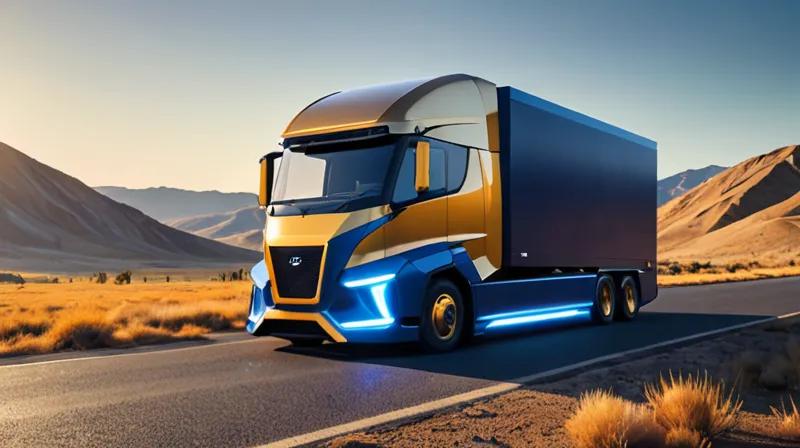
Learn to simulate autonomous truck technology using Python, understanding sensor data processing and navigation logic that powers vehicles like Pony.ai's new electric truck.
Learn how new robots like Agility Robotics' Digit 5 can safely work next to people without safety fences, thanks to advanced sensors and artificial intelligence.
Reward AI has released OM-1, a robot policy trained entirely on human demonstrations, without teleoperation or on-robot data. The system operates at human speed and learns new tasks in under 30 minutes.
This article explains NVIDIA's OSMO, a Kubernetes-native workflow orchestrator that simplifies AI training, simulation, and robot testing by allowing teams to define tasks in a single YAML file and automatically route them to appropriate compute resources.
GPT-6 Astra demonstrates a major leap in spatial reasoning on robotics benchmarks, outperforming competitors in dual-arm robot tasks.
This article explains how robot training data drives AI development and investment patterns in robotics, using Mecka AI's funding round as a case study.
Maven Robotics has emerged from stealth with a $100 million Series A funding round and active deployments, positioning itself as a key player in robotics deployment solutions.
Arm has launched its Arm Total Design for Physical AI framework to standardize development across robotics and automated systems, unlocking a $200 billion compute opportunity by 2030.
AXIS is a browser-based data engine that enables large-scale robot manipulation data collection by offloading computation to backend GPUs. It supports 207 tasks and 50,129 verified trajectories, significantly advancing imitation learning benchmarks.
This article explains robotic perception technology – how robots understand and interact with their environment – using simple analogies and examples. It explores why this technology matters for the future of robotics.
Build a hybrid digital-physical AI system that recognizes extinct animal features using computer vision, machine learning, and robotics. This tutorial demonstrates real-world AI concepts from TechCrunch Disrupt 2026.
World Labs unveils Atlas, a revolutionary AI model that generates, reconstructs, and simulates 3D worlds from just a few photos, leveraging 3D spatial anchoring for enhanced realism and robotics applications.