Introduction
In the rapidly evolving landscape of artificial intelligence, the hardware that powers AI systems plays a crucial role in determining both performance and cost. Recently, a significant shift has emerged in the AI chip market, with major players like Microsoft beginning to diversify their hardware suppliers beyond Nvidia. This move signals a potential weakening of Nvidia's dominant position in the AI chip space, driven by the introduction of competitive alternatives such as AMD's Helios platform. This article explores the technical and strategic implications of this shift, focusing on the underlying concepts of AI chip architecture, supply chain dynamics, and market competition.
What Are AI Chips and Why Are They Important?
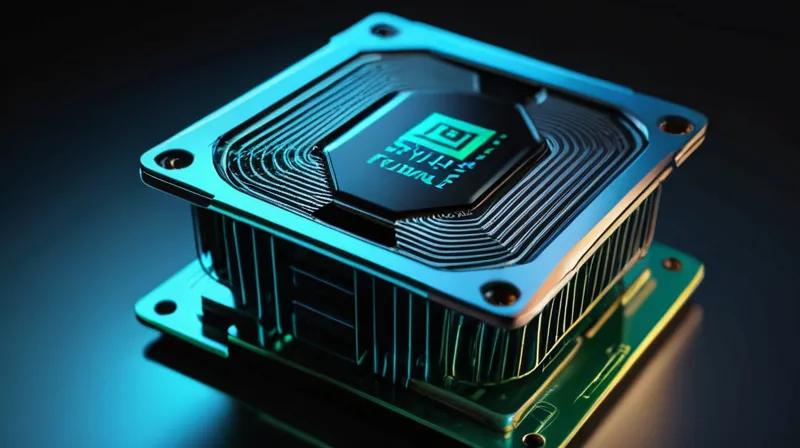
AI chips, also known as AI accelerators or specialized processors, are hardware components specifically designed to perform the computationally intensive tasks required for training and deploying artificial intelligence models. Unlike general-purpose CPUs, these chips are optimized for parallel processing, which is essential for handling the large datasets and complex mathematical operations inherent in machine learning. Examples include Nvidia's Graphics Processing Units (GPUs), Google's Tensor Processing Units (TPUs), and AMD's Radeon Instinct series.
These chips are critical because they enable organizations to scale AI workloads efficiently. For instance, training a large language model like GPT-4 can require thousands of GPU hours, making the choice of hardware a direct determinant of both time-to-market and operational cost.
How Do AI Chips Work?
AI chips operate on principles of parallel computing and specialized instruction sets. They are built around arrays of cores that can execute multiple operations simultaneously, a concept known as massive parallelism. For example, a modern GPU might contain thousands of small processing units (cores) that can handle simple operations in parallel, as opposed to a CPU with fewer, more powerful cores designed for sequential tasks.
These chips also utilize specialized memory hierarchies and high-bandwidth interconnects to ensure that data can be moved efficiently between processing units and memory. For instance, Nvidia's H100 Tensor Core GPUs use a technique called mixed-precision computing, where operations are performed using both 16-bit and 32-bit floating-point numbers to balance speed and accuracy.
Why Does Nvidia's Dominance Matter?
Nvidia's dominance in the AI chip market is rooted in its early entry and superior optimization of GPUs for AI workloads. The company's ecosystem, including CUDA (a parallel computing platform) and cuDNN (a deep learning library), has become the de facto standard for AI development. This has created a network effect, where developers and organizations gravitate toward Nvidia's hardware due to the availability of optimized software tools and community support.
However, this dominance also presents risks. As more organizations adopt AI, the reliance on a single supplier can lead to bottlenecks in supply chain, increased costs, and potential vendor lock-in. The recent interest from Microsoft and Anthropic in AMD's Helios platform signals a growing demand for alternatives that offer competitive performance at potentially lower costs.
Strategic Implications and Market Dynamics
The shift toward diversified hardware suppliers reflects a broader trend in the AI industry toward hardware heterogeneity. Companies are increasingly looking to optimize their AI infrastructure by combining different types of processors, such as CPUs, GPUs, and specialized chips like TPUs or neuromorphic chips, to achieve better performance or cost efficiency.
For example, Microsoft's Azure infrastructure may leverage AMD's Helios platform to reduce dependency on Nvidia while maintaining performance. This diversification also introduces competitive pressure that can drive innovation and potentially lower prices across the industry. As more players enter the AI chip market, the dynamics of pricing, performance, and availability become more complex and dynamic.
Key Takeaways
- AI chips are specialized processors designed to accelerate machine learning workloads through parallel computing and optimized architectures.
- Nvidia's dominance in the market is due to early adoption, software ecosystems (CUDA), and performance advantages, but this creates risks such as vendor lock-in and supply chain vulnerabilities.
- Emerging competitors like AMD are challenging Nvidia's position by offering competitive hardware (e.g., Helios platform) and software ecosystems.
- The move toward diversified hardware suppliers indicates a growing trend toward hardware heterogeneity and competitive market dynamics in the AI infrastructure space.
- This shift could lead to more innovation, better pricing, and reduced dependency on a single supplier, ultimately benefiting the broader AI ecosystem.