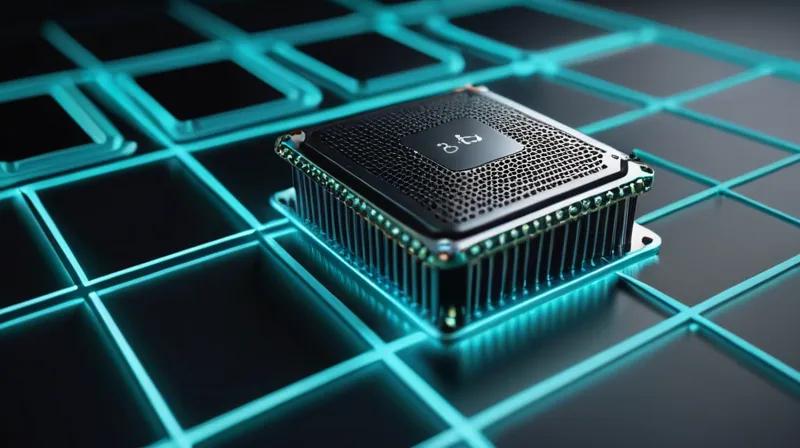
Google is reportedly developing a revolutionary new chip that integrates its Gemini AI model directly into the silicon, marking a significant departure from traditional AI hardware design. Unlike conventional AI chips that act as general-purpose runners for loaded models, this new chip would essentially be the model itself, with Gemini’s architecture embedded at the hardware level. This approach, informally referred to as “Frozen v2,” is said to be part of Google’s broader strategy to accelerate AI processing and reduce latency in its search and cloud services.
Hardware Meets Intelligence
The move represents a shift toward specialized, AI-optimized silicon that could dramatically improve performance for tasks like natural language processing and real-time inference. By embedding the model’s core logic directly into the chip’s hardware, Google aims to eliminate the bottlenecks often associated with software-based AI execution. According to reports from The Information, the chip is designed to be more efficient and responsive, particularly in scenarios where speed and energy consumption are critical.
Strategic Implications
This development places Google at the forefront of a new wave of AI hardware innovation, competing with companies like NVIDIA and AMD that have dominated the AI chip market with general-purpose solutions. Analysts suggest that by creating a chip tailored specifically to Gemini, Google could gain a competitive edge in search and enterprise AI services. However, the project also raises questions about scalability and adaptability, as hardwired models may be less flexible than software-based alternatives.
Conclusion
While still in the early stages, the Frozen v2 chip could redefine how AI is processed at the hardware level. If successful, it may signal a new era where AI models are not just software loaded onto chips, but fundamental building blocks of the hardware itself. As Google continues to refine this approach, the tech industry will be watching closely to see how this innovation impacts the future of AI infrastructure.